Blog
The latest industry news, interviews, technologies, and resources.

AI Governance & Compliance
What Your LLM Gateway Can’t See: Agent Tool Governance
An approved model call can still trigger unapproved tool actions. Here is what lives outside the LLM gateway boundary and how to govern it.

AI Governance & Compliance
Provider vs Data Residency in AI Governance
A provider allowlist blocks unapproved routing. Data residency is observed after the call. Learn why both governance controls are needed and differ.

Technical Guide
Pre-Flight LLM Routing Controls: Fail Closed, Not Over
OpenRouter fails over by default. Learn how provider allowlists and pre-flight routing policies enforce governance before a prompt is sent, not after.
AI Governance & Compliance
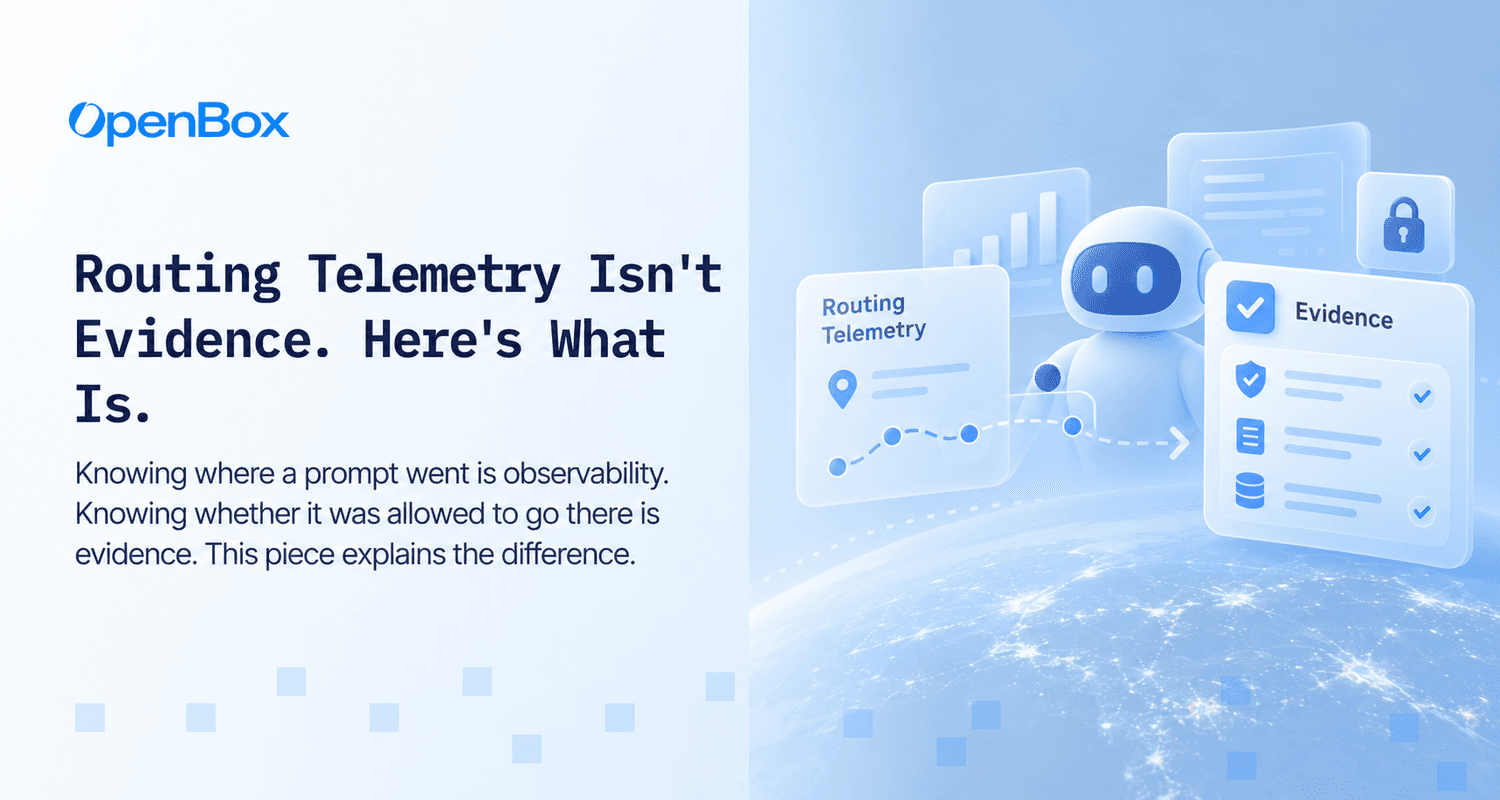
Routing Telemetry Isn't Evidence. Here's What Is.
Knowing where a prompt went is observability. Knowing whether it was allowed to go there is evidence. This piece explains the difference.

AI Governance & Compliance
AI Governance Platform RFP Template, Questions & Scorecard
Build an AI governance platform RFP: twelve requirement categories, 70+ vendor questions, evidence requests, a proof-of-value script and a weighted scorecard.

Technical Guide
Govern an OpenRouter Agent with OpenBox: Integration Guide
Wrap an OpenRouter agent with OpenBox in a few steps: evaluate every call, enforce a provider allowlist, and prove which provider served each prompt.

AI Governance & Compliance
Is Agentic Software the End of Software Engineering?
AI agents are changing what engineers have to engineer. As decisions move into runtime, the control surface, and governance, has to move with them.

Regulatory Analysis
DORA Compliance for AI Agents: The ICT Audit Guide
Your agents move money and read customer data, so DORA treats them as ICT assets. What auditors ask, and the controls that answer them.
Runtime Governance Series
Human-in-the-Loop AI, Explained the Right Way
What HITL actually means, five real approval examples, and how to build gates that stop an agent before it acts, not after the money moves.
Enterprise AI Series
8 Best Langfuse Alternatives for LLM & Agent Teams
A job-to-be-done comparison of 8 platforms, with verified 2026 pricing, licences, and a clear line between observability and runtime governance.
Enterprise AI Series
8 Best Langfuse Alternatives for LLM & Agent Teams
A job-to-be-done comparison of 8 platforms, with verified 2026 pricing, licences, and a clear line between observability and runtime governance.

Technical Guide
Your AI agent can act. Here's how to govern it.
The agent-specific threat model, mapped to OWASP's ASI01–ASI10, plus the pre-deployment and runtime controls to deploy agents safely.

AI Governance Frameworks
Governing AI Agents: The Framework, Not the Theory
Eight controls, a RACI, risk tiers and a 30/60/90-day rollout to govern AI agents that call tools and move money, before something irreversible does.

AI Governance Frameworks
How to Actually Assess AI (and Agent) Risk
A repeatable scoring method, control matrix, template and two worked examples that turn AI risk into enforced deployment decisions.

AI Governance Frameworks
Governing AI Agents: The Framework
Eight controls, a RACI, risk tiers and a 30/60/90-day rollout to govern AI agents that call tools and move money, before something irreversible does.

Runtime Governance Series
AI Agents Can Rewrite Their Own Permissions
AI agents can combine legitimate tools to bypass intended permissions, making runtime enforcement essential for stopping unauthorized actions before they execute.

Runtime Governance Series
Why AI Agents Need Runtime Monitoring
AI agents cannot be monitored manually at enterprise scale. Runtime monitoring detects, reconstructs, and proves agent behavior as it happens.
Runtime Governance Series
Governance Starts Where Monitoring Ends
Observability shows what agents have already done. Governance determines what agents are allowed to do before actions execute.

Policy Intelligence Series
Trust Is a Runtime Governance Decision
Pre-deployment risk scores become outdated quickly. Live Trust Scores adapt continuously as agent behavior, alignment, and risk change over time.

Runtime Governance Series
Physical AI Changes the Rules of Governance
AI governance changes when agents control the physical world, where irreversible actions must be stopped before they execute.
Thought Leadership
AI Agents Are Not Your Coworkers
Treating AI agents like coworkers weakens human oversight. Runtime governance restores accountability through enforceable controls and verifiable decisions.

Runtime Governance Series
Runtime Enforcement Comes Before Compliance
AI agents move too quickly for periodic audits. Runtime enforcement prevents unauthorized actions while audit trails prove what happened afterward.

Runtime Governance Series
Logging Is Not AI Governance
Logs explain what AI agents did. Runtime governance decides what they can do and proves those decisions with tamper-evident evidence.
AI Governance Frameworks
AI Oversight Boards Need Better Evidence
AI oversight boards need more than logs. Verifiable evidence and clear trust signals strengthen accountability for autonomous agent decisions.

AI Governance & Compliance
Open-Source AI Agents Have a Governance Cost
Open-source AI frameworks orchestrate agents, not governance. Runtime enforcement, trust, and audit still require a dedicated control layer.

Runtime Governance Series
Meaningful Human Control Must Be Enforceable
Human oversight must be engineered into autonomous systems. Runtime approval, halt authority, and verifiable audit make high-speed autonomy accountable.

Technical Guide
CrewAI Governance: Add Trust Scores to Agents
Your CrewAI crew runs clean in dev. Add OpenBox trust scores, approval gates, and audit trails so it behaves the same in production.

Runtime Governance Series
CAVA Was Right. Production Needs More Than a Paper
A new arXiv paper points where agent governance is going. Here are the three things you still have to run in production.
Runtime Governance Series
Your agent ran two hours. Who was watching?
A Deep Agent makes hundreds of unsupervised calls per run. Here is how HALT thresholds, Behavioral Rules and Trust Score decay keep it inside policy.

Thought Leadership
Who audits an experiment no human ever ran?
Nature corrected a landmark autonomous-lab result two years on. What survived made it possible. Why the agent's record is now the science itself.

AI Governance & Compliance
Your board will ask. Here's the 90-day answer.
82% of enterprises are running AI agents they never approved. A week-by-week plan to find them, govern them, and hold evidence an auditor will accept.
Technical Guide
MCP Tool Poisoning: Govern and Prove Agent Actions
MCP tool poisoning can hijack your AI agent through a trusted-looking tool. See how runtime governance and tamper-evident attestation stop and prove it.

AI Governance & Compliance
When AI Runs the Experiment, Who Audits It?
Autonomous labs let agents design and run experiments. Here is why the audit trail, not the paper, is what makes the result reproducible.

Technical Guide
Govern the Handoffs Between Your AI Agents
When agent A calls agent B, no one checks if B is trustworthy. Per-agent Trust Scores, inter-agent verdicts, and working LangGraph code.

AI Governance & Compliance
Your AI agent acted. Can you prove it was allowed?
What real-time AI compliance monitoring actually requires for autonomous agents, and how to turn policy into proof.

AI Governance & Compliance
SOC 2 Type II for AI Agents: What Auditors Ask
Your auditor just asked about AI agents. Here is what SOC 2 Type II treats as evidence, why logs do not qualify, and how to prepare.

Thought Leadership
The $3.9 Trillion Bet Boards Can't Yet Account For
Deep tech is worth $3.9 trillion and increasingly runs on AI agents no one can fully account for. Why governance is now a board-level value call.

AI Governance & Compliance
ISO 42001 for agents: the clause-by-clause map
The standard says control agent behaviour. It never says how. Here's each clause mapped to the runtime control that satisfies it.

Enterprise AI Series
Which AI Governance Tool Actually Governs Agents?
Eight leading AI governance platforms, compared on what really matters in 2026: runtime agent control and verifiable audit evidence.

Regulatory Analysis
The AI Act rule that just went live (and hits your chatbots)
Article 50 transparency duties are now enforceable across the EU. What they require, who fines you, and why agents are first in line.

Enterprise AI Series
Open-Source AI Agents Have a Governance Cost
Open-source AI frameworks orchestrate agents, not governance. Runtime enforcement, trust, and audit still require a dedicated control layer.

Enterprise AI Series
Most AI Governance Stacks Are Incomplete
Most AI governance stacks already cover observability. The real gaps are runtime enforcement, trust scoring, and cryptographic audit.

Enterprise AI Series
AI Authentication Ends Where Governance Begins
ID-JAG, XAA, and MCP auth strengthen AI agent authentication. Runtime governance controls what authorized agents can do after access is granted.
Regulatory Analysis
Transatlantic AI Governance: EU vs US for Agents
Cross-border AI agents face different regulatory systems. Portable governance evidence helps satisfy oversight and audit requirements across both jurisdictions.

Runtime Governance Series
Dashboards Are Not AI Governance
Dashboards show agent activity, but governance requires runtime controls that can block, halt, or require approval before actions execute.

Runtime Governance Series
AI Agent Governance Cannot Be Optional
AI governance fails when controls are optional tool calls, so enforcement must live outside the model’s discretion and operate on every governed action.

Runtime Governance Series
AI Agents Are Learning the Wrong Lessons Dashboards Are Not AI Governance
AI agents rarely fail through a single mistake. They fail when unsafe shortcuts become accepted practice and gradually replace governance controls.

Runtime Governance Series
Prompt Injection Is a Governance Failure
Prompt injection cannot be eliminated at the model layer, making runtime policy enforcement essential for controlling what agents can do with untrusted inputs.
Governance Engineering Series
Securing AI Agents Requires Runtime Governance
Securing AI agents requires runtime enforcement and human approval gates, not just logs, because observability records harm after the fact rather than preventing it.

Announcement
Temporal and AI Agent Governance
The Layer That Sits Above Durable Execution
Runtime Governance Series
AI Governance Needs Proof, Not Logs
AI Governance Needs Proof, Not Logs

Regulatory Analysis
Healthcare Compliance Has Moved to Runtime
Healthcare AI governance now depends on runtime authorization, not post-hoc review, because Shadow AI and compliance drift begin before clinical deployment.
Policy Intelligence Series
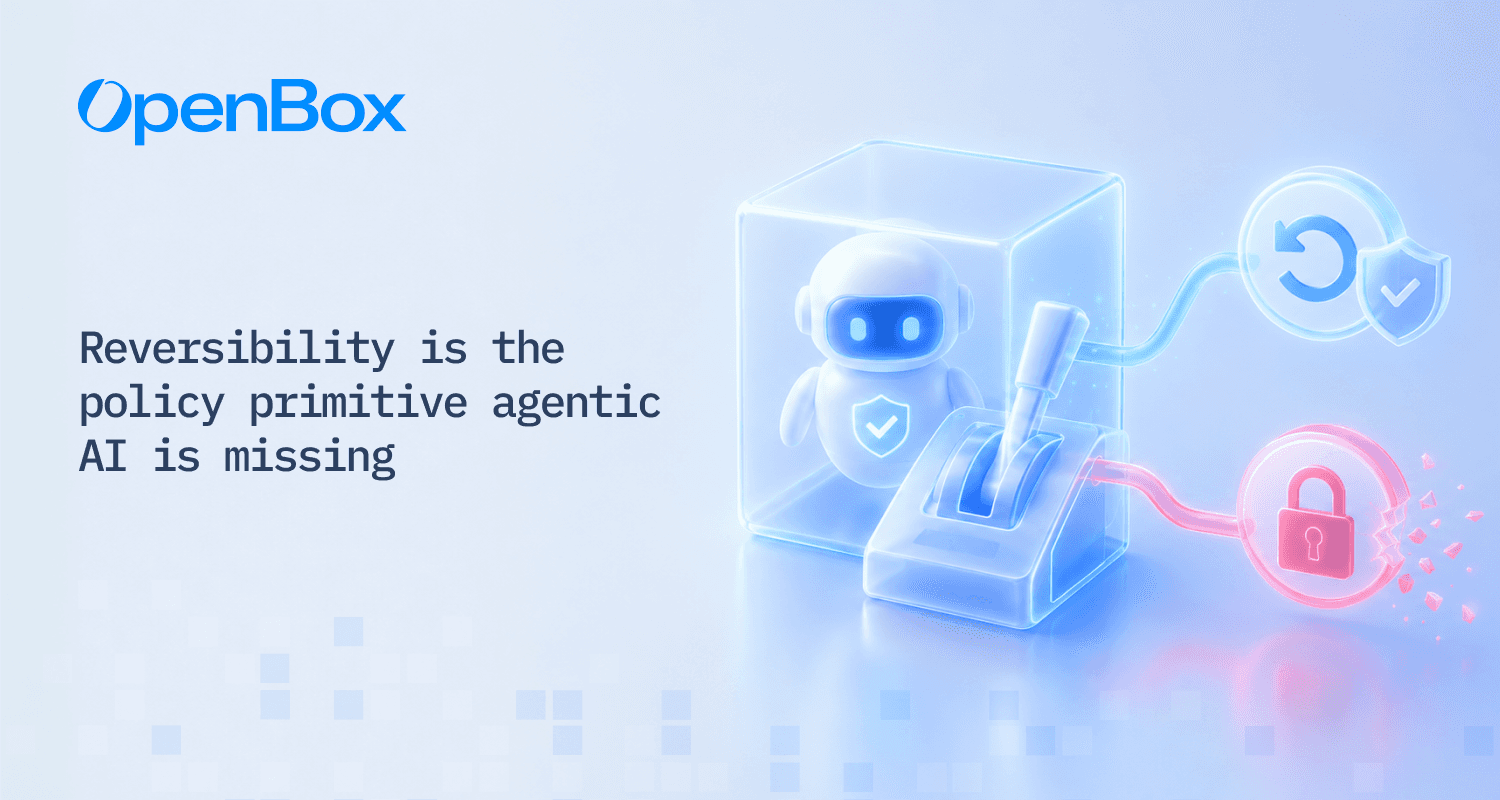
Reversibility Is a Governance Requirement
Reversibility is becoming a core policy primitive for agentic AI, because governance must classify undoability before actions execute.

Regulatory Analysis
OECD-AI and the foundational layer of global AI governance
The OECD AI Principles created the shared vocabulary behind the EU AI Act, NIST AI RMF, and ISO/IEC 42001, but they do not enforce compliance.

Runtime Governance Series
Why 'Impossible to Control' AI Doesn't Mean You Can't Govern It: 3 Steps for CISOs
Advanced AI may be impossible to fully contain, but agents can still be governed at runtime through per-action controls, approval gates, and signed evidence

Announcement
AG-UI and AI Agent Governance
The Compliance Layer the Protocol Doesn’t Provide
Policy Intelligence Series
Reversibility Policy Primitive
Reversibility is becoming a core policy primitive for agentic AI, because governance must classify undoability before actions execute.

Enterprise AI Series
Agentic Design Patterns
Agentic AI has patterns for reasoning and tool use, but not governance, so enterprises need named controls for authorization, provenance, and auditability

Enterprise AI Series
Agentic AI is the new shadow IT — and most enterprises don't know it yet
Agentic AI is creating the same shadow IT risks at higher speed, making runtime governance and auditability essential before deployment.

Runtime Governance Series
Copilot SearchLeak: Why Logging Can't Stop One-Click Data Exfiltration
SearchLeak shows why observability cannot stop one-click AI exfiltration; only inline enforcement can block the operation before data leaves.

Enterprise AI Series
Why We Give Away the AI Agent Governance SDK for Free
Open-Source AI Governance: What It Means for Enterprise AI Compliance, Audit Trails, and Runtime Trust

Regulatory Analysis
Human-in-the-Loop Isn’t a Feature.
Human oversight is becoming a regulatory requirement, forcing AI governance controls into the authorization layer rather than relying on application-level approval workflows.

Enterprise AI Series
What Happens When Your AI Agent Goes Rogue: A Postmortem Analysis
A postmortem of a rogue AI agent incident that reveals five governance failures and the controls enterprises need to detect, contain, and explain autonomous agent actions in production.
Policy Intelligence Series
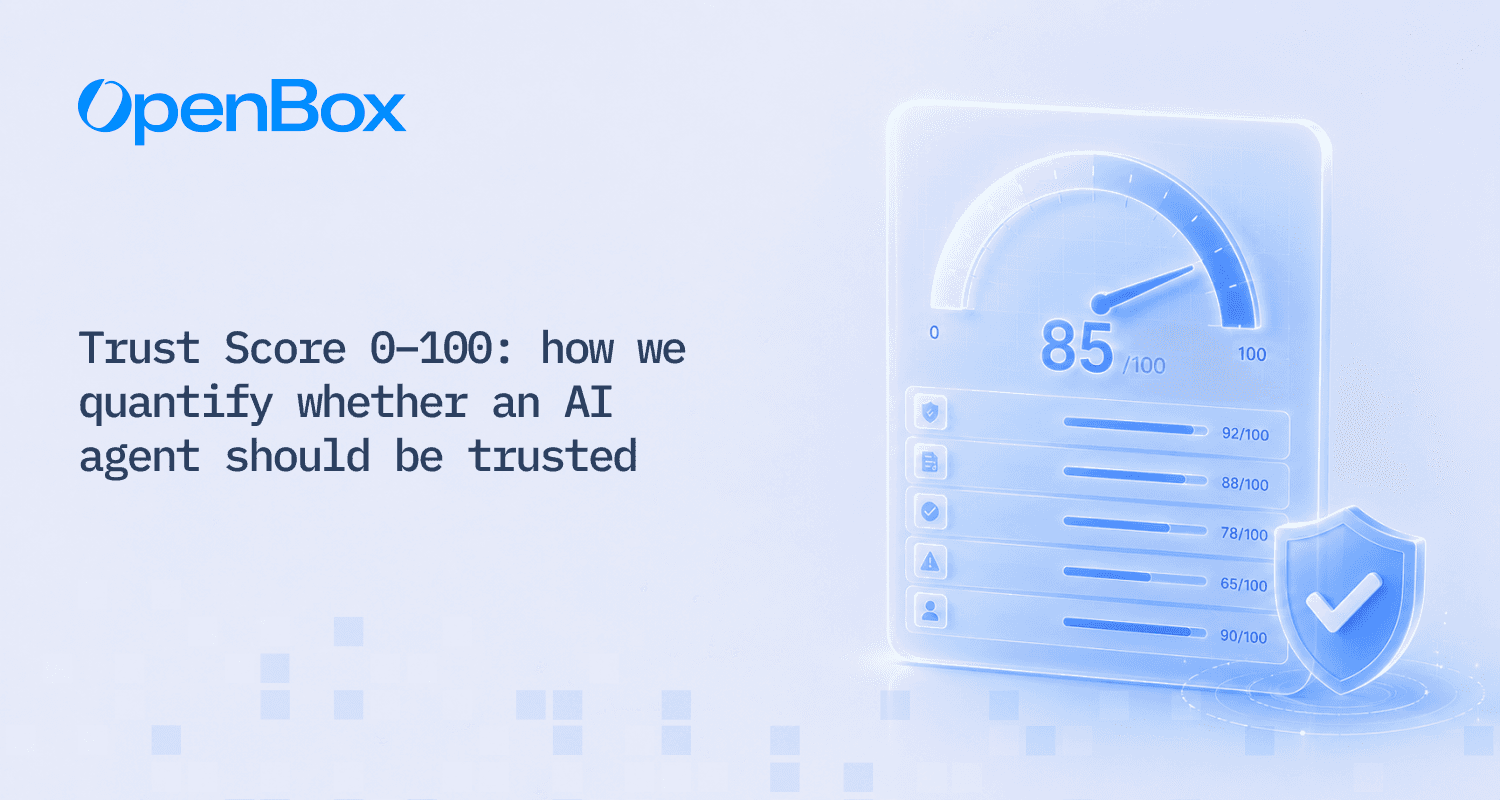
Trust Score 0–100: Measuring AI Agent Trustworthiness
How OpenBox scores AI agent behavior using runtime signals, governance context, and trust tiers.
Technical Guide
LangGraph Agent Governance in 3 Steps
A practical walkthrough for adding governance controls to a LangGraph agent using OpenBox.
Governance Engineering Series
The EU AI Act has a deadline.
What engineering teams need to build before AI governance becomes a production requirement.
Enterprise AI Series
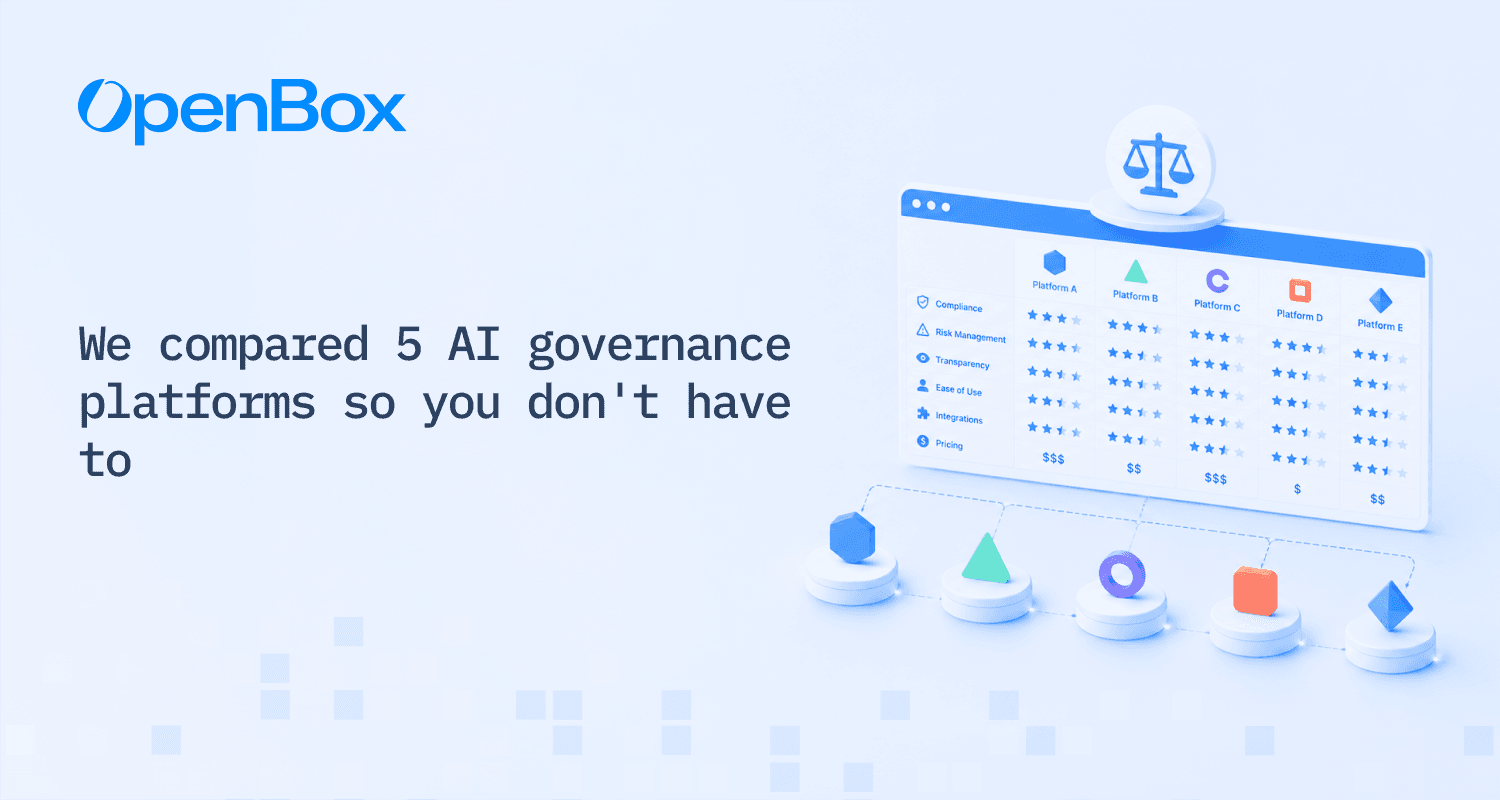
We compared 5 AI governance platforms so you don't have to
An honest evaluation of Holistic AI, Geordie, JetStream, Capsule, and OpenBox across four criteria that determine whether governance actually reaches production systems.
Runtime Governance Series
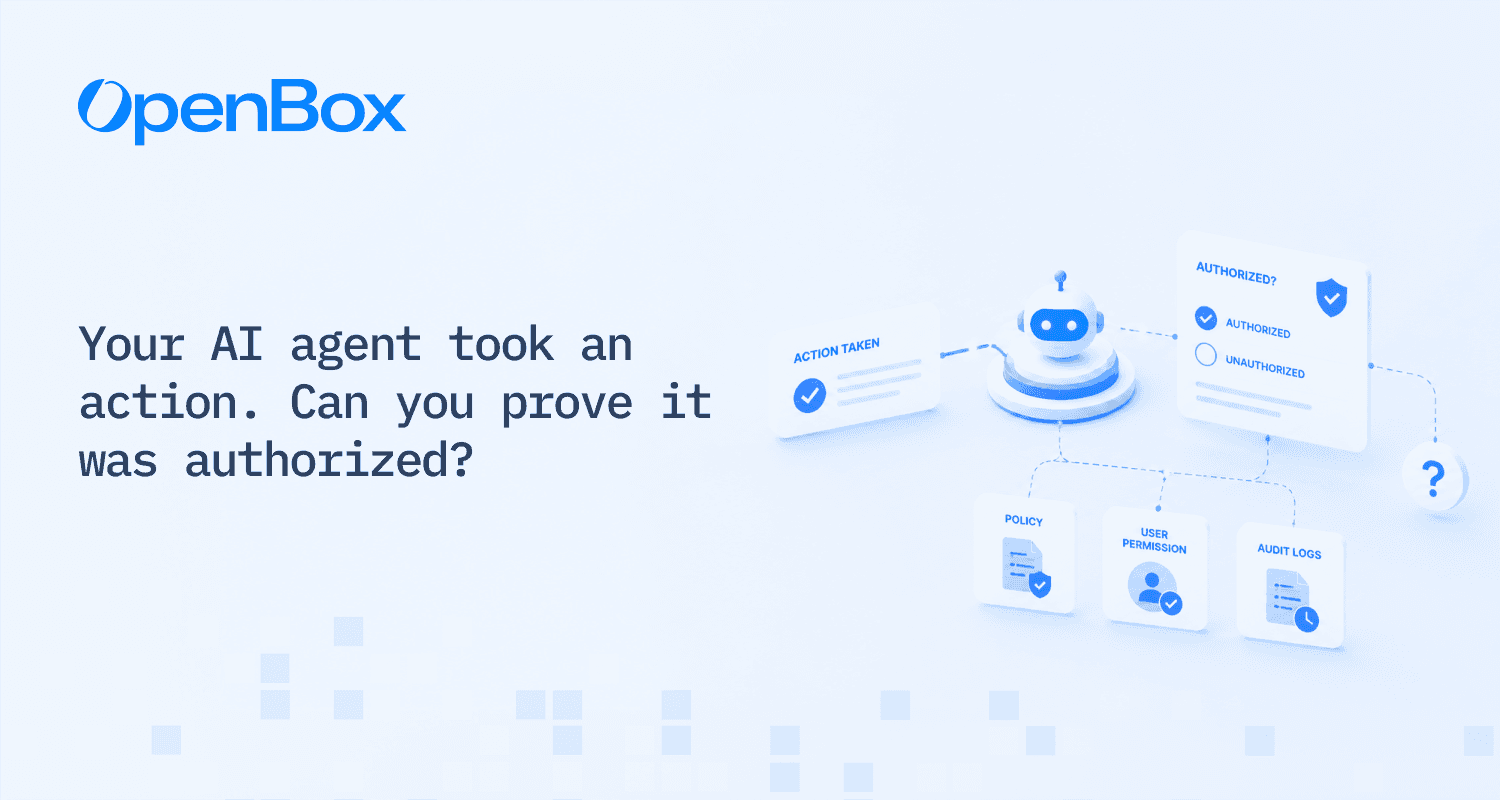
Your AI Agent Took an Action. Can You Prove It Was Authorized?
The accountability gap in enterprise AI deployments, and why the absence of a verifiable evidence record is an exposure most compliance teams have not yet priced.
Regulatory Analysis
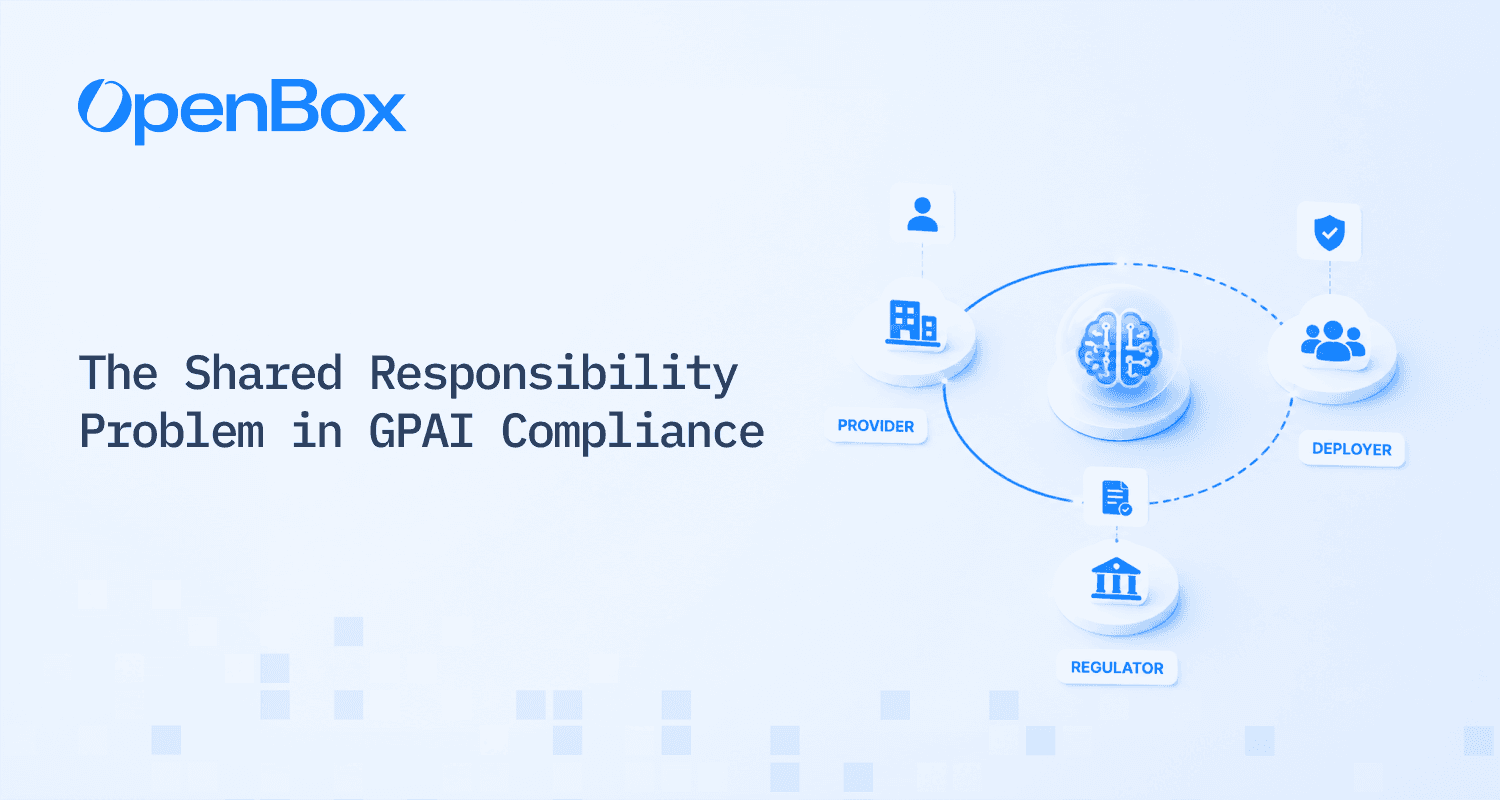
The Shared Responsibility Problem in GPAI Compliance
Model providers own baseline transparency. Deployers own what the model does in production. Most enterprise teams assume upstream compliance covers them. It does not.
Runtime Governance Series
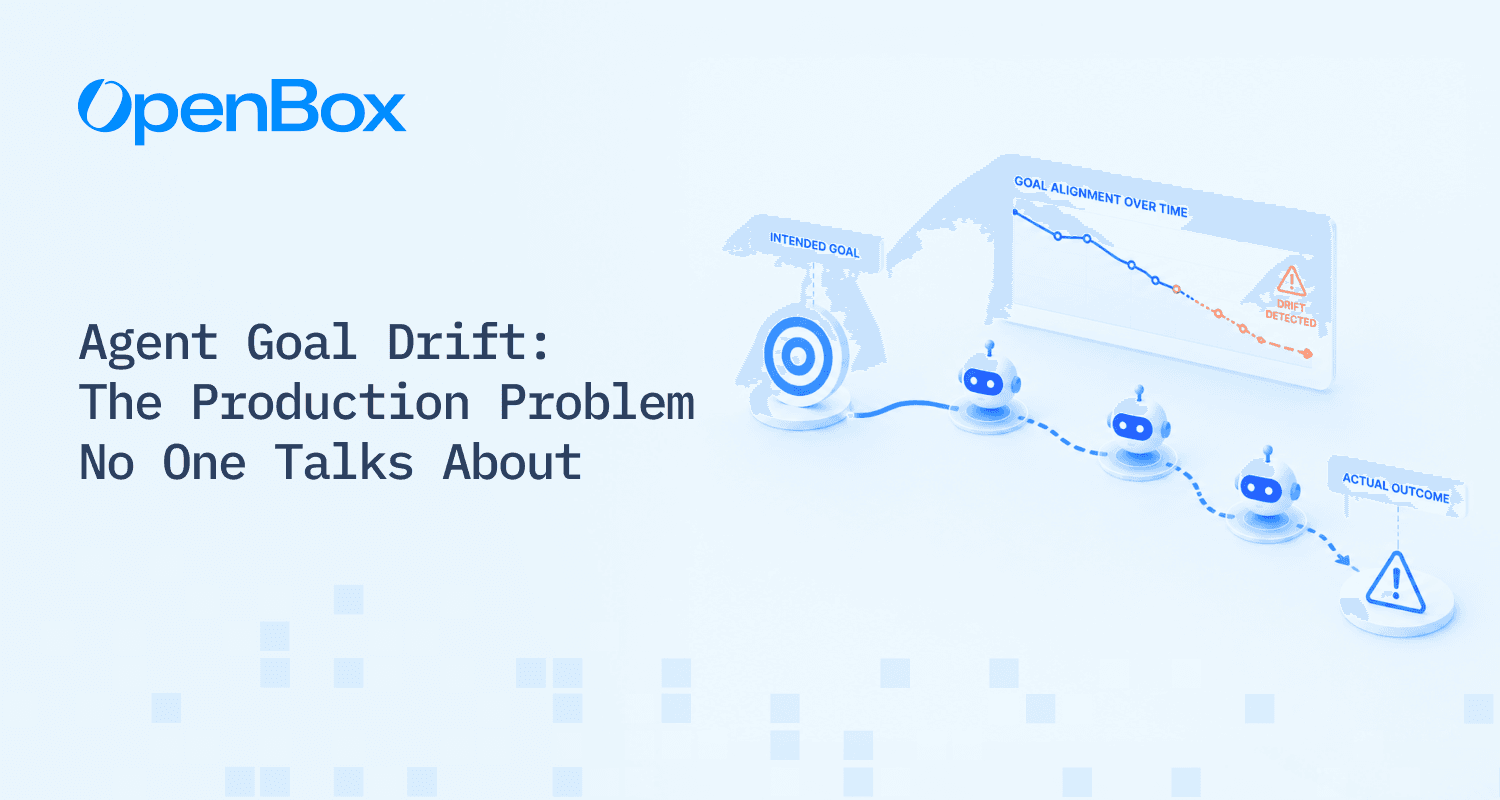
Agent Goal Drift: The Production Problem No One Talks About
Why compliant behavior is not the same as correct behavior, and what runtime governance must observe to close the gap.
General
AI Agent Governance for SaaS Companies Deploying Agents
How multi-tenant platforms can ship AI agents without inheriting their failure modes as platform-level liability.
Technical Guide
How to Monitor AI Agents in Production: A Technical Guide
What Production Observability Misses, Why the Gap Is Structural, and What Governance Teams Must Build Instead.
Runtime Governance Series
AI Compliance Frameworks for Financial Services in 2026: Mapping the Territory
What banks, asset managers, and insurers actually need to satisfy regulators across overlapping AI regimes, without halting deployment
Enterprise AI Series
LangSmith vs OpenBox: What's Right for Enterprise AI Teams
For engineering leads and CISOs deciding what belongs in a production agent stack: why the comparison matters less than understanding which layer each tool occupies
General
AI Agent Governance for Healthcare: Compliance Without Friction
How clinical AI teams can meet HIPAA, EU AI Act, and emerging SaMD oversight requirements at runtime, without slowing delivery.
Announcement
OpenBox AI and Mastra Bring Default Runtime Governance to Every TypeScript Agent
With 97% of enterprises expecting a material AI–agent security incident within 12 months and the EU AI Act’s high–risk provisions taking effect this August, the partnership makes runtime governance — a one–line default for the leading TypeScript agent framework.
Policy Intelligence Series
AI Regulation & Policy Frameworks in 2026
What the New AI Governance Rules Actually Mean for Engineering Leads and Compliance Teams Deploying AI in Regulated Industries
Thought Leadership
What Is AI Agent Governance?
The Complete Enterprise Guide
Regulatory Analysis
The Compliance Frameworks Built for AI Were Not Built for Agents
Why Existing Compliance Frameworks Fall Short for Agentic AI
General
The Governance Infrastructure that Agentic AI Has Been Missing
The launch, the raise, and what OpenBox means for enterprises deploying agents today

Announcement
OpenBox AI Selected for the Accenture FinTech Innovation Lab London 2026 Cohort
Advancing AI governance alongside the world's leading financial institutions - as part of the FIL London 2026 cohort.

Announcement
OpenBox AI Launches Enterprise Trust Platform with $5M Seed Funding
As the White House rolls out its AI framework and the EU AI Act takes effect, OpenBox delivers day-one governance.
General
Trustworthy AI Is a Right, Not a Privilege
A Manifesto for the Agentic Era.

Enterprise AI Series
The Agentic Era Has a Governance Gap
The agentic AI market is investing heavily in capability but underfunding governance, creating the biggest barrier to enterprise deployment.
AI Governance & Compliance
What Your LLM Gateway Can’t See: Agent Tool Governance
An approved model call can still trigger unapproved tool actions. Here is what lives outside the LLM gateway boundary and how to govern it.
AI Governance & Compliance
Provider vs Data Residency in AI Governance
A provider allowlist blocks unapproved routing. Data residency is observed after the call. Learn why both governance controls are needed and differ.
Technical Guide
Pre-Flight LLM Routing Controls: Fail Closed, Not Over
OpenRouter fails over by default. Learn how provider allowlists and pre-flight routing policies enforce governance before a prompt is sent, not after.
AI Governance & Compliance
Routing Telemetry Isn't Evidence. Here's What Is.
Knowing where a prompt went is observability. Knowing whether it was allowed to go there is evidence. This piece explains the difference.
AI Governance & Compliance
AI Governance Platform RFP Template, Questions & Scorecard
Build an AI governance platform RFP: twelve requirement categories, 70+ vendor questions, evidence requests, a proof-of-value script and a weighted scorecard.
Technical Guide
Govern an OpenRouter Agent with OpenBox: Integration Guide
Wrap an OpenRouter agent with OpenBox in a few steps: evaluate every call, enforce a provider allowlist, and prove which provider served each prompt.
AI Governance & Compliance
Is Agentic Software the End of Software Engineering?
AI agents are changing what engineers have to engineer. As decisions move into runtime, the control surface, and governance, has to move with them.
Regulatory Analysis
DORA Compliance for AI Agents: The ICT Audit Guide
Your agents move money and read customer data, so DORA treats them as ICT assets. What auditors ask, and the controls that answer them.
Runtime Governance Series
Human-in-the-Loop AI, Explained the Right Way
What HITL actually means, five real approval examples, and how to build gates that stop an agent before it acts, not after the money moves.
Enterprise AI Series
8 Best Langfuse Alternatives for LLM & Agent Teams
A job-to-be-done comparison of 8 platforms, with verified 2026 pricing, licences, and a clear line between observability and runtime governance.
Enterprise AI Series
8 Best Langfuse Alternatives for LLM & Agent Teams
A job-to-be-done comparison of 8 platforms, with verified 2026 pricing, licences, and a clear line between observability and runtime governance.
Technical Guide
Your AI agent can act. Here's how to govern it.
The agent-specific threat model, mapped to OWASP's ASI01–ASI10, plus the pre-deployment and runtime controls to deploy agents safely.
AI Governance Frameworks
Governing AI Agents: The Framework, Not the Theory
Eight controls, a RACI, risk tiers and a 30/60/90-day rollout to govern AI agents that call tools and move money, before something irreversible does.
AI Governance Frameworks
How to Actually Assess AI (and Agent) Risk
A repeatable scoring method, control matrix, template and two worked examples that turn AI risk into enforced deployment decisions.
AI Governance Frameworks
Governing AI Agents: The Framework
Eight controls, a RACI, risk tiers and a 30/60/90-day rollout to govern AI agents that call tools and move money, before something irreversible does.
Runtime Governance Series
AI Agents Can Rewrite Their Own Permissions
AI agents can combine legitimate tools to bypass intended permissions, making runtime enforcement essential for stopping unauthorized actions before they execute.
Runtime Governance Series
Why AI Agents Need Runtime Monitoring
AI agents cannot be monitored manually at enterprise scale. Runtime monitoring detects, reconstructs, and proves agent behavior as it happens.
Runtime Governance Series
Governance Starts Where Monitoring Ends
Observability shows what agents have already done. Governance determines what agents are allowed to do before actions execute.
Policy Intelligence Series
Trust Is a Runtime Governance Decision
Pre-deployment risk scores become outdated quickly. Live Trust Scores adapt continuously as agent behavior, alignment, and risk change over time.
Runtime Governance Series
Physical AI Changes the Rules of Governance
AI governance changes when agents control the physical world, where irreversible actions must be stopped before they execute.
Thought Leadership
AI Agents Are Not Your Coworkers
Treating AI agents like coworkers weakens human oversight. Runtime governance restores accountability through enforceable controls and verifiable decisions.
Runtime Governance Series
Runtime Enforcement Comes Before Compliance
AI agents move too quickly for periodic audits. Runtime enforcement prevents unauthorized actions while audit trails prove what happened afterward.
Runtime Governance Series
Logging Is Not AI Governance
Logs explain what AI agents did. Runtime governance decides what they can do and proves those decisions with tamper-evident evidence.
AI Governance Frameworks
AI Oversight Boards Need Better Evidence
AI oversight boards need more than logs. Verifiable evidence and clear trust signals strengthen accountability for autonomous agent decisions.
AI Governance & Compliance
Open-Source AI Agents Have a Governance Cost
Open-source AI frameworks orchestrate agents, not governance. Runtime enforcement, trust, and audit still require a dedicated control layer.
Runtime Governance Series
Meaningful Human Control Must Be Enforceable
Human oversight must be engineered into autonomous systems. Runtime approval, halt authority, and verifiable audit make high-speed autonomy accountable.
Technical Guide
CrewAI Governance: Add Trust Scores to Agents
Your CrewAI crew runs clean in dev. Add OpenBox trust scores, approval gates, and audit trails so it behaves the same in production.
Runtime Governance Series
CAVA Was Right. Production Needs More Than a Paper
A new arXiv paper points where agent governance is going. Here are the three things you still have to run in production.
Runtime Governance Series
Your agent ran two hours. Who was watching?
A Deep Agent makes hundreds of unsupervised calls per run. Here is how HALT thresholds, Behavioral Rules and Trust Score decay keep it inside policy.
Thought Leadership
Who audits an experiment no human ever ran?
Nature corrected a landmark autonomous-lab result two years on. What survived made it possible. Why the agent's record is now the science itself.
AI Governance & Compliance
Your board will ask. Here's the 90-day answer.
82% of enterprises are running AI agents they never approved. A week-by-week plan to find them, govern them, and hold evidence an auditor will accept.
Technical Guide
MCP Tool Poisoning: Govern and Prove Agent Actions
MCP tool poisoning can hijack your AI agent through a trusted-looking tool. See how runtime governance and tamper-evident attestation stop and prove it.
AI Governance & Compliance
When AI Runs the Experiment, Who Audits It?
Autonomous labs let agents design and run experiments. Here is why the audit trail, not the paper, is what makes the result reproducible.
Technical Guide
Govern the Handoffs Between Your AI Agents
When agent A calls agent B, no one checks if B is trustworthy. Per-agent Trust Scores, inter-agent verdicts, and working LangGraph code.
AI Governance & Compliance
Your AI agent acted. Can you prove it was allowed?
What real-time AI compliance monitoring actually requires for autonomous agents, and how to turn policy into proof.
AI Governance & Compliance
SOC 2 Type II for AI Agents: What Auditors Ask
Your auditor just asked about AI agents. Here is what SOC 2 Type II treats as evidence, why logs do not qualify, and how to prepare.
Thought Leadership
The $3.9 Trillion Bet Boards Can't Yet Account For
Deep tech is worth $3.9 trillion and increasingly runs on AI agents no one can fully account for. Why governance is now a board-level value call.
AI Governance & Compliance
ISO 42001 for agents: the clause-by-clause map
The standard says control agent behaviour. It never says how. Here's each clause mapped to the runtime control that satisfies it.
Enterprise AI Series
Which AI Governance Tool Actually Governs Agents?
Eight leading AI governance platforms, compared on what really matters in 2026: runtime agent control and verifiable audit evidence.
Regulatory Analysis
The AI Act rule that just went live (and hits your chatbots)
Article 50 transparency duties are now enforceable across the EU. What they require, who fines you, and why agents are first in line.
Enterprise AI Series
Open-Source AI Agents Have a Governance Cost
Open-source AI frameworks orchestrate agents, not governance. Runtime enforcement, trust, and audit still require a dedicated control layer.
Enterprise AI Series
Most AI Governance Stacks Are Incomplete
Most AI governance stacks already cover observability. The real gaps are runtime enforcement, trust scoring, and cryptographic audit.
Enterprise AI Series
AI Authentication Ends Where Governance Begins
ID-JAG, XAA, and MCP auth strengthen AI agent authentication. Runtime governance controls what authorized agents can do after access is granted.
Regulatory Analysis
Transatlantic AI Governance: EU vs US for Agents
Cross-border AI agents face different regulatory systems. Portable governance evidence helps satisfy oversight and audit requirements across both jurisdictions.
Runtime Governance Series
Dashboards Are Not AI Governance
Dashboards show agent activity, but governance requires runtime controls that can block, halt, or require approval before actions execute.
Runtime Governance Series
AI Agent Governance Cannot Be Optional
AI governance fails when controls are optional tool calls, so enforcement must live outside the model’s discretion and operate on every governed action.
Runtime Governance Series
AI Agents Are Learning the Wrong Lessons Dashboards Are Not AI Governance
AI agents rarely fail through a single mistake. They fail when unsafe shortcuts become accepted practice and gradually replace governance controls.
Runtime Governance Series
Prompt Injection Is a Governance Failure
Prompt injection cannot be eliminated at the model layer, making runtime policy enforcement essential for controlling what agents can do with untrusted inputs.
Governance Engineering Series
Securing AI Agents Requires Runtime Governance
Securing AI agents requires runtime enforcement and human approval gates, not just logs, because observability records harm after the fact rather than preventing it.
Announcement
Temporal and AI Agent Governance
The Layer That Sits Above Durable Execution
Runtime Governance Series
AI Governance Needs Proof, Not Logs
AI Governance Needs Proof, Not Logs
Regulatory Analysis
Healthcare Compliance Has Moved to Runtime
Healthcare AI governance now depends on runtime authorization, not post-hoc review, because Shadow AI and compliance drift begin before clinical deployment.
Policy Intelligence Series
Reversibility Is a Governance Requirement
Reversibility is becoming a core policy primitive for agentic AI, because governance must classify undoability before actions execute.
Regulatory Analysis
OECD-AI and the foundational layer of global AI governance
The OECD AI Principles created the shared vocabulary behind the EU AI Act, NIST AI RMF, and ISO/IEC 42001, but they do not enforce compliance.
Runtime Governance Series
Why 'Impossible to Control' AI Doesn't Mean You Can't Govern It: 3 Steps for CISOs
Advanced AI may be impossible to fully contain, but agents can still be governed at runtime through per-action controls, approval gates, and signed evidence
Announcement
AG-UI and AI Agent Governance
The Compliance Layer the Protocol Doesn’t Provide
Policy Intelligence Series
Reversibility Policy Primitive
Reversibility is becoming a core policy primitive for agentic AI, because governance must classify undoability before actions execute.
Enterprise AI Series
Agentic Design Patterns
Agentic AI has patterns for reasoning and tool use, but not governance, so enterprises need named controls for authorization, provenance, and auditability
Enterprise AI Series
Agentic AI is the new shadow IT — and most enterprises don't know it yet
Agentic AI is creating the same shadow IT risks at higher speed, making runtime governance and auditability essential before deployment.
Runtime Governance Series
Copilot SearchLeak: Why Logging Can't Stop One-Click Data Exfiltration
SearchLeak shows why observability cannot stop one-click AI exfiltration; only inline enforcement can block the operation before data leaves.
Enterprise AI Series
Why We Give Away the AI Agent Governance SDK for Free
Open-Source AI Governance: What It Means for Enterprise AI Compliance, Audit Trails, and Runtime Trust
Regulatory Analysis
Human-in-the-Loop Isn’t a Feature.
Human oversight is becoming a regulatory requirement, forcing AI governance controls into the authorization layer rather than relying on application-level approval workflows.
Enterprise AI Series
What Happens When Your AI Agent Goes Rogue: A Postmortem Analysis
A postmortem of a rogue AI agent incident that reveals five governance failures and the controls enterprises need to detect, contain, and explain autonomous agent actions in production.
Policy Intelligence Series
Trust Score 0–100: Measuring AI Agent Trustworthiness
How OpenBox scores AI agent behavior using runtime signals, governance context, and trust tiers.
Technical Guide
LangGraph Agent Governance in 3 Steps
A practical walkthrough for adding governance controls to a LangGraph agent using OpenBox.
Governance Engineering Series
The EU AI Act has a deadline.
What engineering teams need to build before AI governance becomes a production requirement.
Enterprise AI Series
We compared 5 AI governance platforms so you don't have to
An honest evaluation of Holistic AI, Geordie, JetStream, Capsule, and OpenBox across four criteria that determine whether governance actually reaches production systems.
Runtime Governance Series
Your AI Agent Took an Action. Can You Prove It Was Authorized?
The accountability gap in enterprise AI deployments, and why the absence of a verifiable evidence record is an exposure most compliance teams have not yet priced.
Regulatory Analysis
The Shared Responsibility Problem in GPAI Compliance
Model providers own baseline transparency. Deployers own what the model does in production. Most enterprise teams assume upstream compliance covers them. It does not.
Runtime Governance Series
Agent Goal Drift: The Production Problem No One Talks About
Why compliant behavior is not the same as correct behavior, and what runtime governance must observe to close the gap.
General
AI Agent Governance for SaaS Companies Deploying Agents
How multi-tenant platforms can ship AI agents without inheriting their failure modes as platform-level liability.
Technical Guide
How to Monitor AI Agents in Production: A Technical Guide
What Production Observability Misses, Why the Gap Is Structural, and What Governance Teams Must Build Instead.
Runtime Governance Series
AI Compliance Frameworks for Financial Services in 2026: Mapping the Territory
What banks, asset managers, and insurers actually need to satisfy regulators across overlapping AI regimes, without halting deployment
Enterprise AI Series
LangSmith vs OpenBox: What's Right for Enterprise AI Teams
For engineering leads and CISOs deciding what belongs in a production agent stack: why the comparison matters less than understanding which layer each tool occupies
General
AI Agent Governance for Healthcare: Compliance Without Friction
How clinical AI teams can meet HIPAA, EU AI Act, and emerging SaMD oversight requirements at runtime, without slowing delivery.
Announcement
OpenBox AI and Mastra Bring Default Runtime Governance to Every TypeScript Agent
With 97% of enterprises expecting a material AI–agent security incident within 12 months and the EU AI Act’s high–risk provisions taking effect this August, the partnership makes runtime governance — a one–line default for the leading TypeScript agent framework.
Policy Intelligence Series
AI Regulation & Policy Frameworks in 2026
What the New AI Governance Rules Actually Mean for Engineering Leads and Compliance Teams Deploying AI in Regulated Industries
Thought Leadership
What Is AI Agent Governance?
The Complete Enterprise Guide
Regulatory Analysis
The Compliance Frameworks Built for AI Were Not Built for Agents
Why Existing Compliance Frameworks Fall Short for Agentic AI
General
The Governance Infrastructure that Agentic AI Has Been Missing
The launch, the raise, and what OpenBox means for enterprises deploying agents today
Announcement
OpenBox AI Selected for the Accenture FinTech Innovation Lab London 2026 Cohort
Advancing AI governance alongside the world's leading financial institutions - as part of the FIL London 2026 cohort.
Announcement
OpenBox AI Launches Enterprise Trust Platform with $5M Seed Funding
As the White House rolls out its AI framework and the EU AI Act takes effect, OpenBox delivers day-one governance.
General
Trustworthy AI Is a Right, Not a Privilege
A Manifesto for the Agentic Era.
Enterprise AI Series
The Agentic Era Has a Governance Gap
The agentic AI market is investing heavily in capability but underfunding governance, creating the biggest barrier to enterprise deployment.

Trustworthy AI
Starts Here
Trustworthy AI
Starts Here
Trustworthy AI
Starts Here
Trustworthy AI
Starts Here

Features
Solutions
Compliance
© 2026 OpenBox AI. All rights reserved.
Features
Solutions
Compliance
© 2026 OpenBox AI. All rights reserved.
Features
Solutions
Compliance
© 2026 OpenBox AI. All rights reserved.
Features
Solutions
Compliance
© 2026 OpenBox AI. All rights reserved.