General
AI Agent Governance for SaaS Companies Deploying Agents
How multi-tenant platforms can ship AI agents without inheriting their failure modes as platform-level liability.
Published on
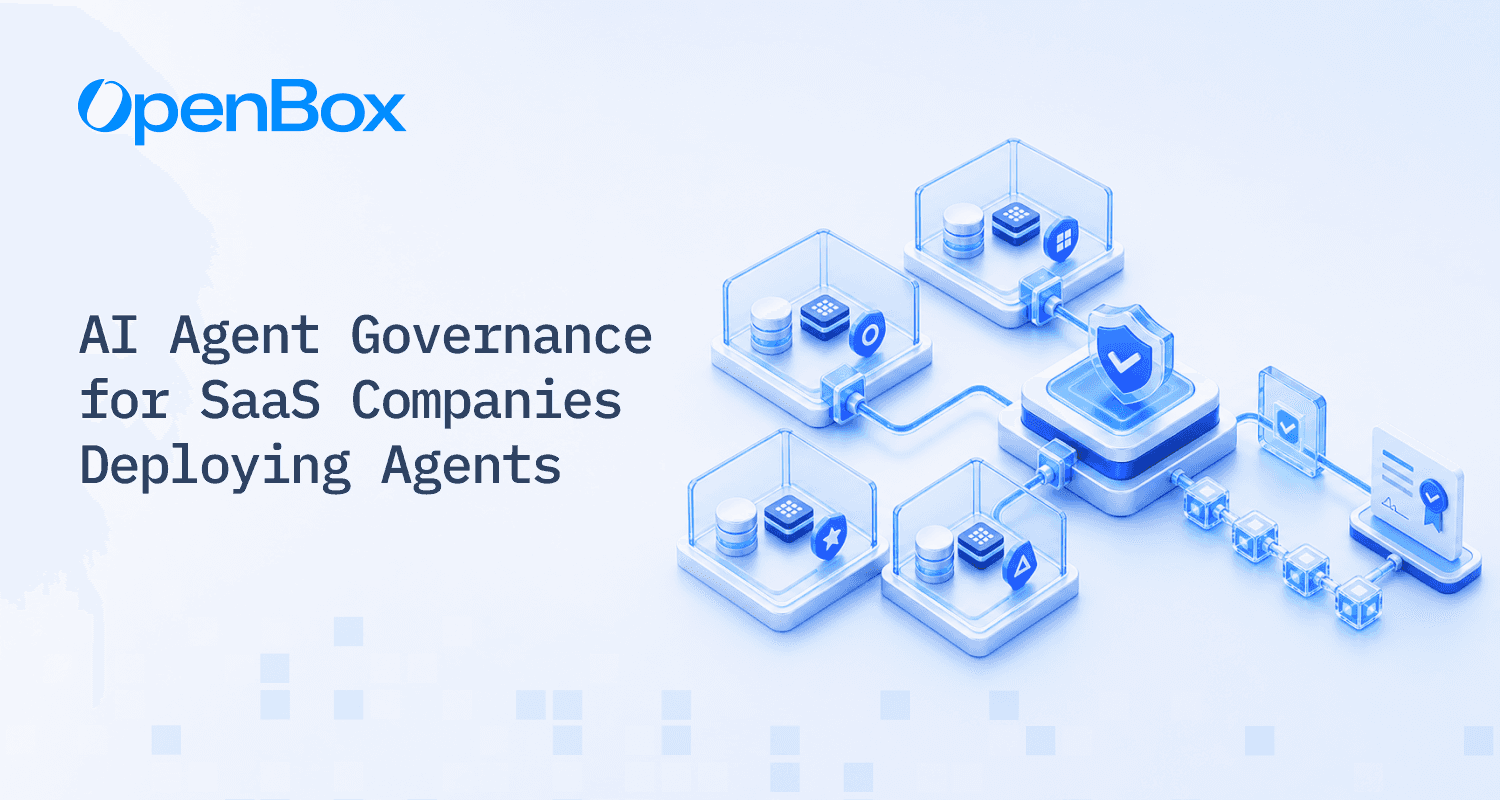


AI agents break the isolation assumptions multi-tenant SaaS architectures were built on. Governance that operates outside the runtime execution path cannot reliably prevent tenant-context leakage once agents begin reasoning across sessions, prompts, and retrieved context.
A SaaS company deploys an agent inside its multi-tenant CRM platform to summarize customer interactions, draft outreach sequences, and surface account intelligence to sales teams. The platform serves seven hundred customer organizations, each with its own data, its own access boundaries, and its own contractual obligations under GDPR, SOC 2, and a growing set of customer-specific data processing agreements. The agent operates across all of them. Within sixty days of deployment, an internal review surfaces an uncomfortable pattern: an agent operating on behalf of one tenant occasionally references context that belongs to a different tenant. No data has crossed the database boundary. The retrieval layer is correctly scoped. The model itself, in certain prompt conditions, produces output that should not exist at the application layer. This is the central problem of AI agents in SaaS: the failure modes that were tenant-isolated under traditional software are not tenant-isolated under agent execution. Governance must hold at the runtime layer, attached to every agent action, or it holds nowhere.
The platform-level consequence is what makes this category of failure different. In traditional multi-tenant SaaS, a bug in tenant-handling code is a vendor problem: a SEV-1 to be patched, a postmortem to be written. In agent execution, the same class of failure is a contractual exposure across every tenant the agent touches during the window. The vendor is not just shipping a feature with a defect. The vendor is the data processor for every customer that the agent operates on behalf of. A failure in agent governance is a failure in a regulated relationship with hundreds of counterparties simultaneously.
The Tenant Boundary Gap
Call this structural failure the Tenant Boundary Gap: the condition in which an agent's reasoning operates across tenant contexts that the platform's data and access layers correctly hold apart.
The gap does not appear in any of the controls SaaS engineering teams already trust. Database queries are scoped. API routes are authenticated. Object-level permissions resolve correctly. The data layer is doing what it was built to do. The agent layer is doing something the data layer was never built to govern: composing reasoning across information it has been exposed to during a session, in ways that downstream output filters cannot reliably catch. A retrieval system can be perfectly tenant-scoped and still feed an agent context that the agent then references in a response intended for a different tenant on a subsequent turn.
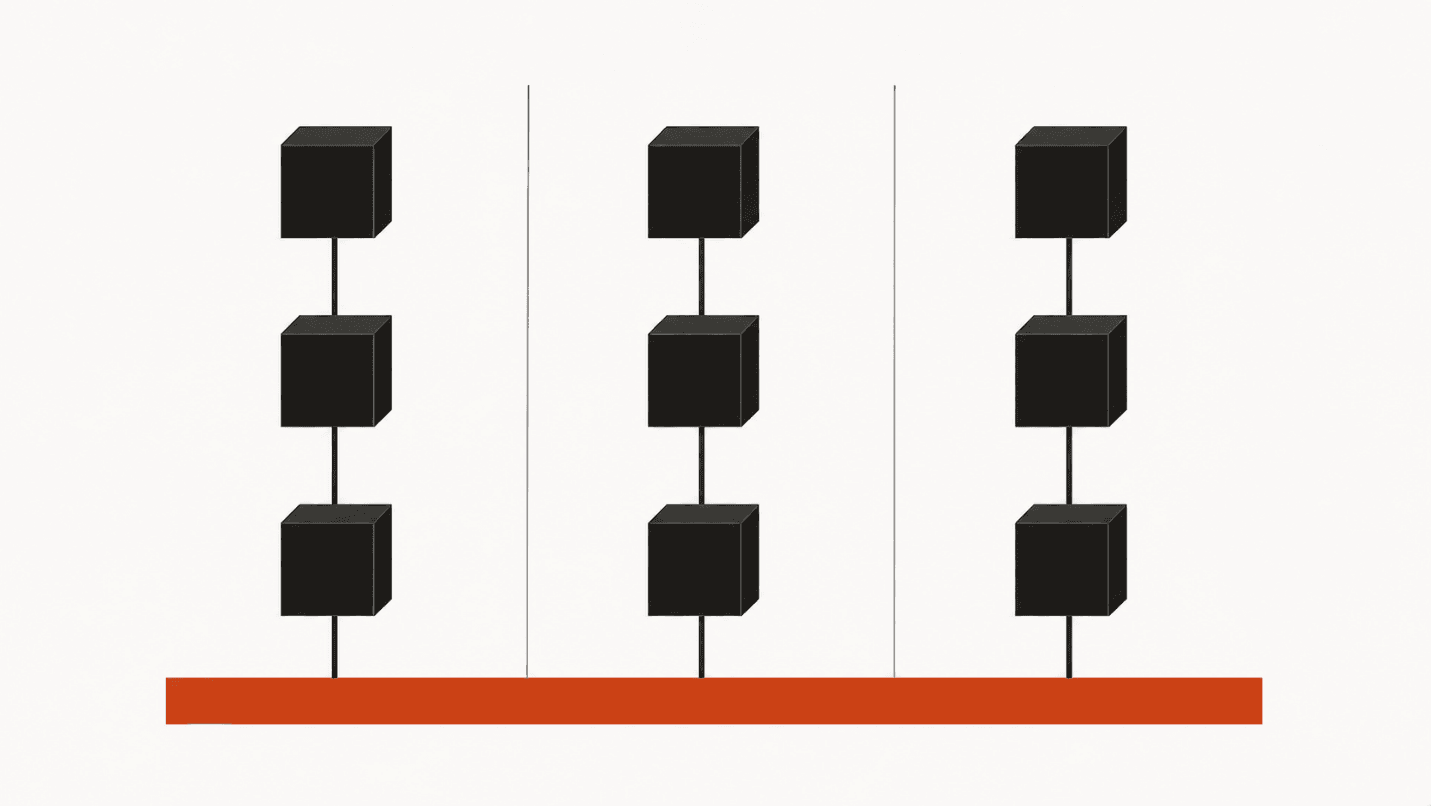
This is why traditional SaaS isolation guarantees do not transfer to agent deployment. The boundary that matters in the old architecture is data access. The boundary that matters in agent execution is decision context. The agent's effective access to information is not what the database returned; it is what remains available to its reasoning across the session. Every SaaS platform shipping agents inherits this gap, and every one of them inherits it across every tenant simultaneously.
Why Existing SaaS Controls Do Not Close the Gap
SaaS engineering has thirty years of accumulated wisdom on multi-tenant architecture. Row-level security. Tenant-scoped API keys. Per-tenant encryption boundaries. Audit logs that separate tenant activity. None of these controls are wrong, and none of them are sufficient when the unit operating across tenants is no longer a query but an agent.
The gap is structural. Existing SaaS controls operate at the data and access layers. They answer the question of what a given tenant is permitted to retrieve. They do not answer the question of what an agent is permitted to do with what it has retrieved, what it has been exposed to in earlier turns, or what reasoning patterns it is permitted to compose. That question, the governance question, has no native control surface in the SaaS stack as currently built.
Three distinctions matter for SaaS teams evaluating where their existing controls end. Authentication validates that a tenant is who they claim to be. Authorization determines what data they can access. Governance, in the agent sense, decides whether the agent acting on their behalf is permitted to compose a particular response from the context it now holds. The first two are well-served by existing infrastructure. The third is not, and no amount of investment in the first two will produce the third. Governance is a different control surface, operating at a different layer, on a different category of decision.
What SaaS Agent Governance Actually Requires
Effective runtime governance for agents in a SaaS platform requires three capabilities that existing tenant-isolation infrastructure does not provide.
Per-tenant policy isolation at the agent layer. Different tenants operate under different contractual and regulatory regimes. A tenant in healthcare has different data handling obligations than a tenant in financial services, and both differ from a tenant on a baseline commercial agreement. Agent governance must enforce policy at the granularity of the tenant whose work the agent is performing, not at the granularity of the platform deployment. A single agent serving multiple tenants must operate under multiple, independent policy sets that resolve at runtime based on which tenant is currently being served.
Cross-tenant context containment. The platform must enforce, at the point of agent action, that no reasoning composed from one tenant's context produces output served to another. This is not a logging requirement. It is an enforcement requirement, and it operates on a control surface that data-layer isolation does not reach. The agent has already been exposed to context across the session. The question governance answers is whether the agent is permitted to act on that exposure in a particular outbound response.
Tenant-scoped governance attestation. Each tenant must be able to demonstrate, under contractual or regulatory examination, what governance held over agent actions performed on their behalf. The attestation cannot be a platform-wide log that the tenant is referenced in. It must be a tenant-scoped, signed record of every governance decision applied to agent actions taken in that tenant's context. Without this, the platform cannot answer a customer's data processing audit with anything stronger than its own internal monitoring records.
OpenBox as the Governance Layer
OpenBox (docs.openbox.ai) is designed to operate as a runtime governance layer for AI agents. It is designed to integrate with existing agent infrastructure without requiring major architectural change, enforcing governance decisions at the point of execution rather than observing them after. For SaaS platforms, the relevant property is that the Trust Lifecycle (Assess, Authorize, Monitor, Verify, Adapt) operates per-agent and per-tenant simultaneously, which maps directly onto the three SaaS governance requirements above.
Assess establishes the behavioral baseline for each agent in the platform. The Risk Profile Score maps the agent into a Trust Tier that defines its autonomy envelope. The Behavioral and Alignment components of the Trust Score update continuously as behavioral data accumulates, meaning drift remains measurable against a living reference rather than a static snapshot. A SaaS platform deploying a customer-facing agent on a baseline commercial tier does not begin production at the same Trust Tier as the same agent deployed under a tenant subject to processor obligations under GDPR Article 28. The baseline reflects the operating context, not just the agent itself.
Authorize enforces governance through three coordinated control surfaces: output constraints, policy evaluation, and stateful behavioral analysis. Guardrails enforce hard constraints on agent actions. Specific guardrail types are detailed in the OpenBox guardrails documentation. Policies, expressed as OPA/Rego stateless permission checks, encode per-tenant contractual and regulatory obligations as enforceable conditions on every agent action. Each Policy evaluation produces an enforcement decision resolved at the point of agent action. Behavioral Rules detect stateful multi-step patterns that no single-action check can surface. An agent may execute a sequence of individually permitted retrievals and reasoning steps that together produce output containing information from a tenant context other than the one currently being served. Each step passes a single-action check. The sequence fails governance evaluation as a whole. That distinction is what stateful multi-step detection is designed to catch. The output of every Authorize evaluation is a Governance Decision: ALLOW, REQUIRE_APPROVAL, BLOCK, or HALT.
Monitor is real-time behavioral observation. The observation is continuous across every agent session, scoped to the tenant context in which the session is running. Every governance decision the agent makes is captured as it occurs, producing a continuous behavioral signal available to both runtime enforcement and post-hoc review.
Verify evaluates whether the agent's actions across a session remain aligned with the tenant-specific governance conditions under which it operates. It validates that the controls applied during Authorize continue to hold as behavior evolves: whether the per-tenant Policies fire where they should, whether the cross-tenant Behavioral Rules surface the patterns they are configured to detect, and whether the Guardrails enforce the boundaries they are configured for. Session Replay is intended to reconstruct the decision path for a session in a form reviewable by the platform's compliance team, the tenant's compliance team, and any external auditor either party engages. Verify is the structural complement to Authorize, not a substitute for it.
Cryptographic Attestation produces a tamper-proof certificate per governance session, hashing all session events into a Merkle tree and signing the root using ECDSA NIST P-256 via AWS KMS by default, providing a signed record of governance decisions applied during that session. The tenant-scoped governance attestation is the audit record itself: signed evidence of what the governance layer evaluated and decided during every session. When a customer requests a data processing audit, the platform does not surface internal monitoring logs. It delivers the tenant-scoped governance attestation.
Adapt is the policy update layer. When the Risk Profile Score crosses a Trust Tier boundary, the system can reclassify the agent automatically, narrowing or expanding the agent's permission envelope without requiring manual intervention. Per-tenant Guardrail and Behavioral Rule configurations refine in response to what Verify surfaces. Policies are versioned. The governance posture adjusts on the signal the system produces, not on the review cycle the platform's compliance calendar dictates.
Data-layer isolation is necessary. Runtime governance is what makes tenant isolation enforceable during agent execution.
What Changes for the SaaS Operating Model
The shift from observability to runtime governance changes three operating questions for a SaaS platform shipping agents.
The first is the customer trust question. Enterprise buyers procuring AI-enabled SaaS are no longer satisfied by SOC 2 reports that describe controls over the platform. They are asking for evidence of governance over the agents acting on their data. A platform that cannot produce tenant-scoped governance attestation is positioned where SaaS vendors once stood on data residency without adequate controls: making promises in marketing material that cannot be demonstrated under contractual audit. Tenant-scoped governance attestation is the procurement-grade answer to a procurement-grade question.
The second is the platform liability question. In traditional SaaS, a defect in tenant-handling code creates a single vendor incident. In agent execution, a defect in agent governance creates a class of incidents across every tenant the agent served during the affected window, each of which may carry independent contractual notification obligations. Runtime governance is not a feature investment. It is a structural reduction in the platform's exposure to a category of incident that scales with tenant count rather than incident count.
The third is the velocity question. SaaS platforms deliver features. The slowest path to shipping a new agent capability is the path that requires a compliance review for every customer the platform serves. Runtime governance, applied at the platform layer, allows the platform to deploy new agent capabilities into a governance environment that already enforces tenant-specific policy. The compliance review is performed against the governance layer, not against every feature deployment that passes through it. Velocity returns to engineering. Defensibility remains in the architecture.
The Inevitable Architecture
Enterprise procurement teams are converging on a single requirement for AI-enabled SaaS: demonstrable governance over agent behavior in production, scoped to the customer's contractual and regulatory environment. The EU AI Act increases accountability expectations for platform vendors whose agents operate inside customer environments, particularly where those agents constitute or operate within high-risk AI systems under the Act's classification framework. NIST AI RMF's GOVERN function, ISO/IEC 42001's continual improvement requirements, and the standard control sets in SOC 2 and ISO 27001 are converging on the same expectation: governance must operate continuously over AI systems in deployment, not be certified once at release.
These frameworks are not converging on a documentation standard. They are converging on an enforcement architecture for AI-enabled SaaS. The underlying requirement is that governance decisions over agent actions must be made at the point of execution, scoped per tenant, attested in a form that survives external examination, and validated continuously against the controls under which the agent was authorized.
The Tenant Boundary Gap does not close through stronger database isolation or additional monitoring layers. It closes when governance moves into the same instant as the agent's action and resolves at the granularity of the tenant whose work is being performed. SaaS platforms that cannot demonstrate tenant-scoped runtime governance are not deploying governed agents. They are deploying agent behavior they cannot prove safe under customer audit. That gap is becoming enforceable. Enterprise customers are no longer evaluating whether SaaS platforms deploy AI agents. They are evaluating whether those platforms can demonstrate governance over every agent action performed on the customer's behalf. Platforms that cannot answer that question are not competitors; they are liabilities.